4 portions
This pasta is generally considered lactose-free. In fact, during Pecorino Romano production and aging process, the lactose is broken down into lactic acid by bacteria, resulting in a very low lactose content - typically less than 0.1g per 100g - which is well below the threshold considered safe for most individuals with lactose intolerance.
Chef’s tip:
Creating a simple cheese paste with a little hot water before adding the cheese to the hot pasta helps prevent the cheese from splitting. Cooking the pasta as if it was a risotto for absorption straight into the pan (or half boiled and half into the pan) helps retain some of the starch into the dressing, achieving the praised creaminess.
To create the cheese paste, drop very little hot water into a bowl with the finely grated cheeses and mix with a spatula until you have obtained a grainy paste. Keep on the side.
In a large saucepan, gently heat a tablespoon of ground black pepper for about 1 minute. Toast it for 2-3 minutes and then cool the pan down with a ladle of water.
If you want to cook the pasta traditionally, drop it into salted boiling water. For the pasta risottata method, add the pasta straight into the saucepan with the pepper and pour enough hot water to cover it.
Cook the pasta for the time indicated on the packet. If using the risotto method, keep adding hot water as it gets absorbed. Stir gently for the first 2 minutes to avoid breaking the spaghetti and continue stirring occasionally as it cooks.
When the pasta is done, ensure there is at least one ladle of residual water left in the pan and gradually add the cheese paste while mixing it into the pasta. If the spaghetti becomes too sticky, add a ladle of reserved pasta water (hot but not boiling) and keep mixing.
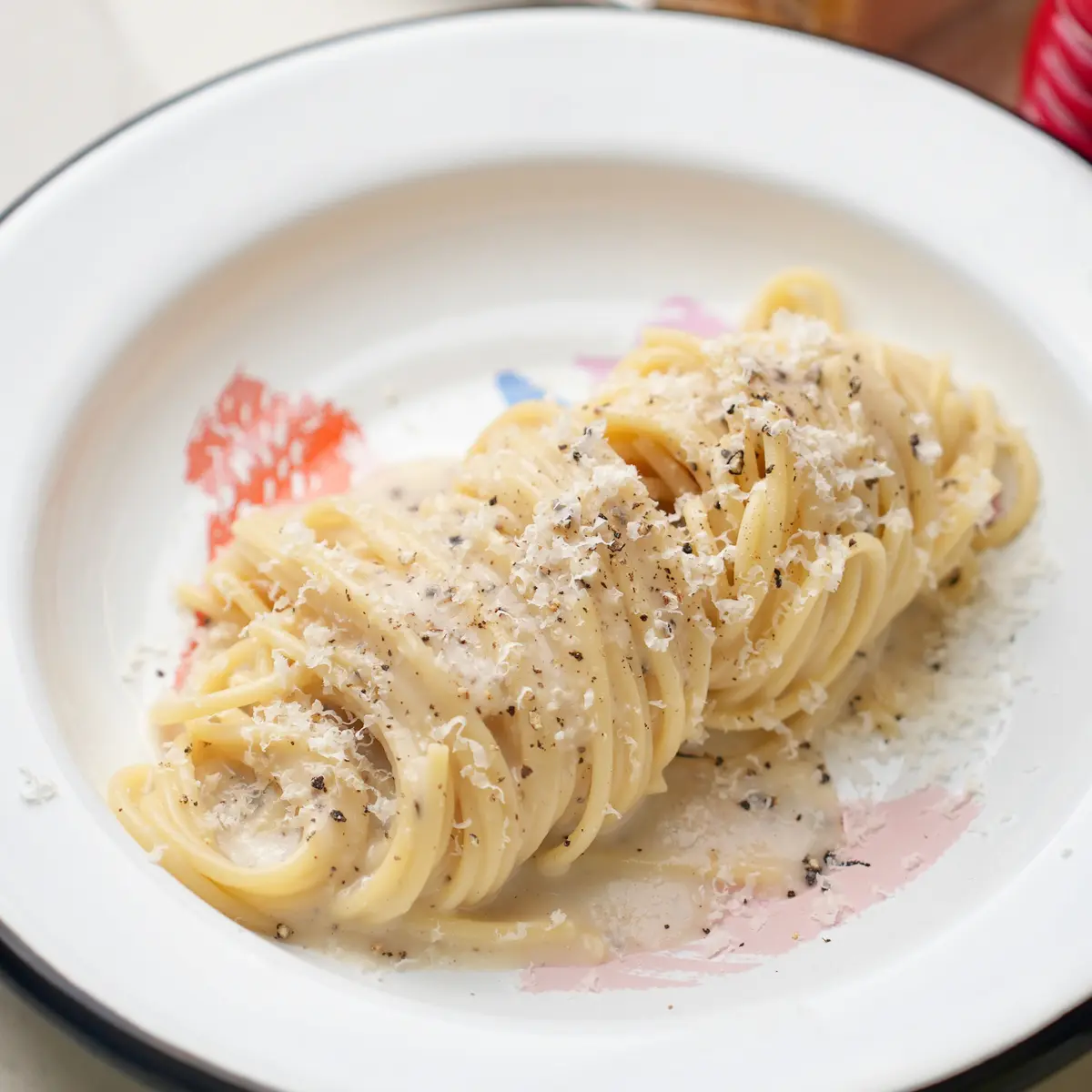
Plate immediately in shallow bowls, finish with a last scrunch of black pepper and a sprinkle of grated cheese – and enjoy!